
Laboratories & Instrumentation
The DMC has two flowing seawater laboratories on our waterfront campus with dry and wet lab space for resident faculty and visiting investigators.
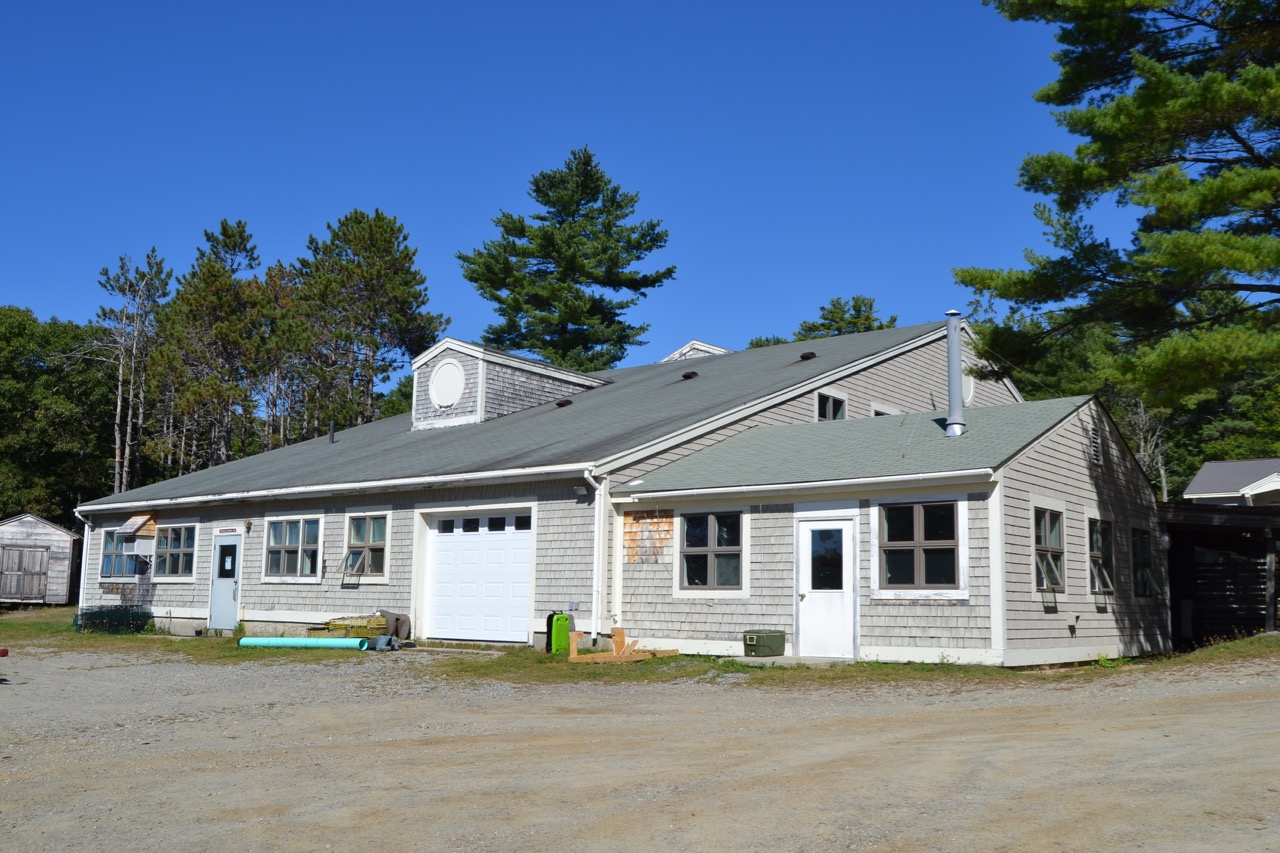 The Flowing Seawater Laboratory (FSL) was renovated in 2021, thanks to support from the US Economic Development Administration (EDA), Maine state bond funds, and support from the University of Maine. It was originally built in the late 1960s and expanded in 1991, thanks to many donors and friends of the DMC. The ground floor includes a modern wet lab and office/lab space for visiting investigators. Office and lab space for faculty, staff and graduate students are located on the second floor.
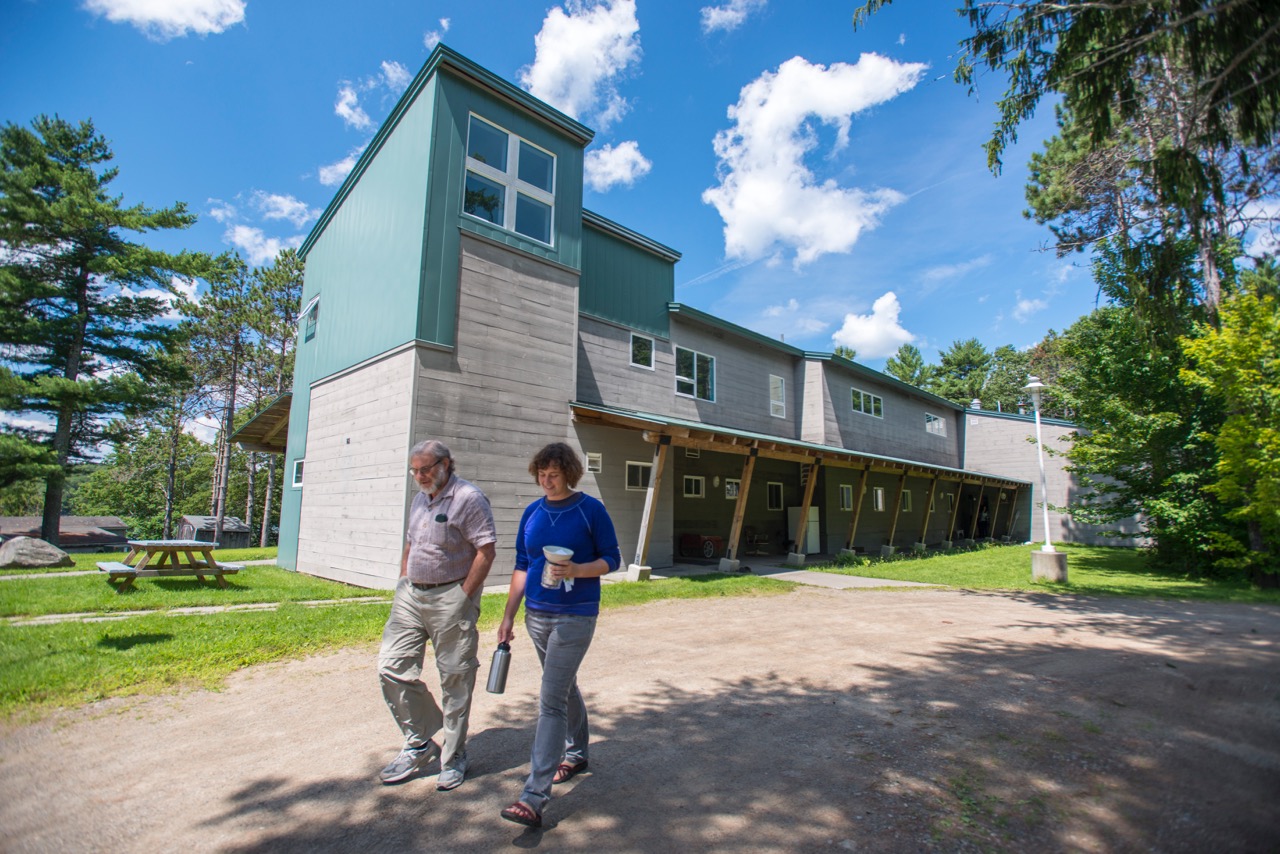 The Marine Culture Laboratory (MCL) was completed in 2001 with funding from the Maine Technology Asset Fund (MTAF). The focus of this facility is shellfish and algal culture, to support a range of applied and basic research projects, many of which are conducted in collaboration with industry.
Pumps at the end of the DMC pier push 500 gallons of seawater per minute to head tanks in the MCL. From there gravity pulls the seawater through the wet labs and classrooms, back to the river. The ambient flow-through system enables researchers to hold native organisms for further study and controlled experiments. A quarantine room is available for holding non-native species.
Both wet labs have modular tank racks and a variety of tank sizes that facilitate flexible experimental set-up and design, and the capacity for chilled or heated seawater. Environmental chambers, walk-in coolers and state-of-the-art instrumentation for a wide variety of research interests are also available.
Our visitor laboratories average 100 square feet. Each includes running fresh water, phone, internet access and plenty of storage and works pace. Visiting investigators have access to general use equipment and wet lab tank space. General use equipment includes: micro-balance, water baths, shakers, incubators, fume hoods and darkroom.
The DMC invites visiting researchers to conduct on site. Office and laboratory space in our flowing seawater laboratories are available for rent year round. Contact dmc@maine.edu to learn more.
Flowing Seawater Facilities
Plankton culture facilities (Kalwal and SEACAPS)
RO pure water purification system
Spectrofluorimeter
Olympus BX-FLA fluorescence equipped microscope w/SLR camera attachment
Coulter Counter
UV-VIS spectrophotometer
Ultra-cold freezer
Walk-in environmental chambers
Video-equipped compound and dissecting Olympus microscopes
Marine Water Quality Laboratory
Lachat Quickchem Analyzers: Phosphate, silicate, nitrate, nitrite
Shimadzu TOC/TNM: Total nitrogen, dissolved nitrogen, dissolved organic carbon, dissolved inorganic carbon, total carbon
Shimadzu Spectrophotometer: CDOM
Perkin Elmer Elemental Analyzer: Total carbon and total nitrogen of solid samples
Freeze dryer: For preparation of solid samples for carbon and nitrogen analysis
Trilogy fluorometer: Extracted chlorophyll and phaeophytin fluorescence
Surface Area Analyzer: Surface area of soils, sediment and particle samples
FIAlab FIAlyzer1000: Ammonia
Zeiss fluorescent microscope
Compound and dissecting scopes
Oceanography of Fisheries and Aquaculture Laboratory
YSI EXO 2 sondes: Temperature, salinity, dissolved oxygen, pH, chlorophyll a, turbidity,, fluoresced Dissolved Organic Matter (fDOM), depth
Sea-bird SUNA: Optical Nitrate Sensors
Nortek Signature 1000: Acoustic current profiler
Nortek Aquadopp: Current speed and direction
Sea-bird SeaFET: pH sensors
Sea-bird C-Star: Transmissometers
LICOR: in air PAR sensors
Sea-bird Eco-PAR: in water PAR sensors
LICOR profiling PAR sensors to pair with YSI EXO 2 sondes
McLane: Imagine Flow CytoBot
Contros HydroFIA: Total Alkalinity Analyzer
Lowell: Tilt Current Meters
InSitu AquaTroll 500: multi parameter sonde
Eureka Manta pCO2 sensor with live readout
Onset HOBO: Conductivity and temperature sensors